Refrigerator problem
Frost Building Up in the Refrigerator
Ice on the back wall, around the door, or over the whole freezer — and each location means something different.
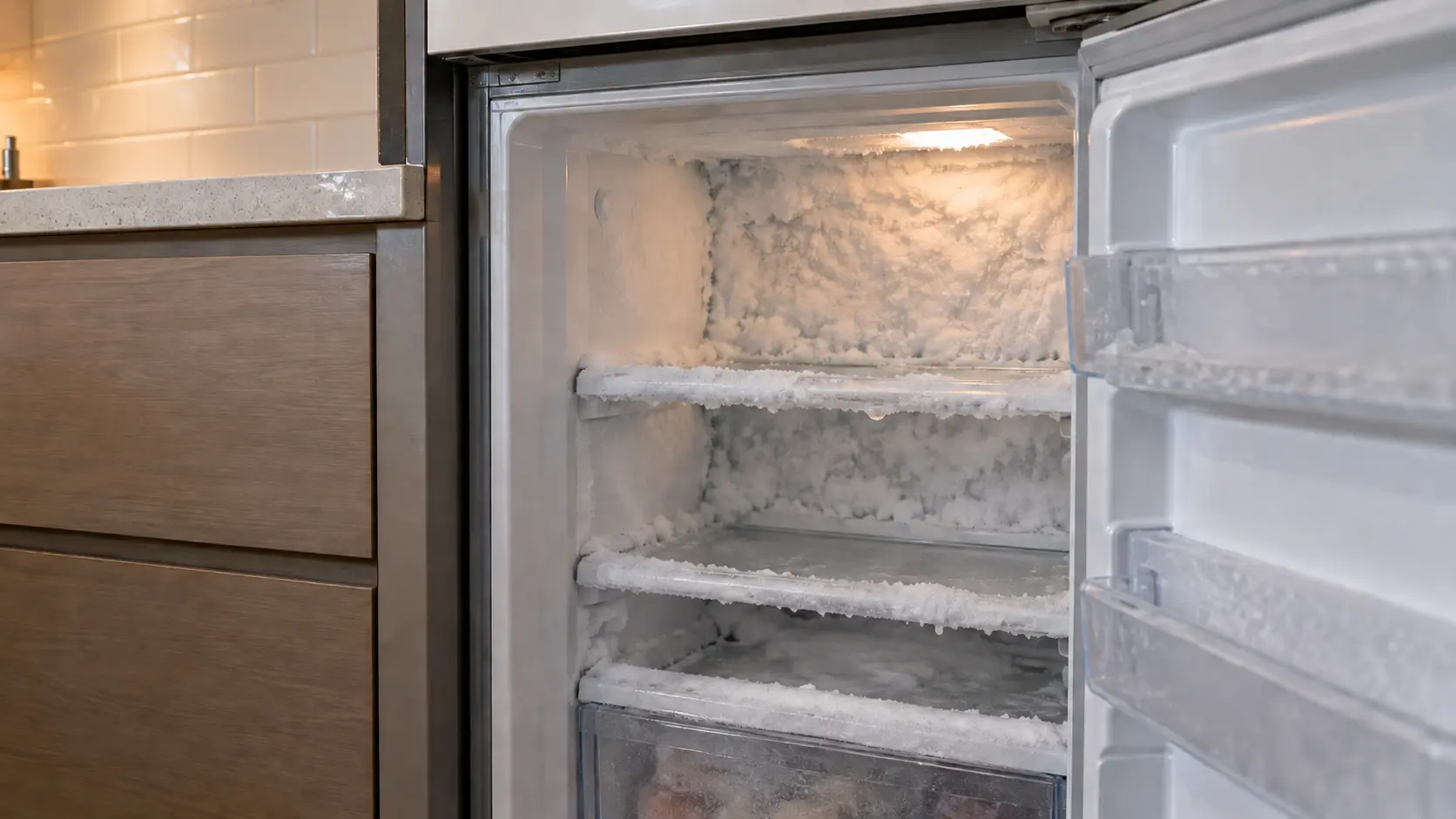
What this usually means
Frost is water that arrived as humid air and never left. On an automatic-defrost appliance it should be cleared several times a day, so visible frost means either that the defrost cycle is not completing or that far more humid air is getting in than the cycle was designed to handle. Where the frost sits tells you which of the two it is.
Five observations that narrow it
Answer these before anyone visits. Each one removes a whole branch of the diagnosis, and they cost nothing.
Where exactly is the frost: the back panel, the door seal, the ceiling, or everywhere?
Is it a hard clear sheet or a soft white fur?
Does the appliance defrost automatically, or is it a manual model?
Has the humidity in the room risen, or the door been opened more than usual?
Is the fresh-food compartment warmer than it used to be?
Causes, cheapest first
In roughly the order a technician rules them out. The expensive answer is at the bottom because it is usually the last one true, not the first.
Door seal admitting humid air
lowFrost concentrated near the door line points outward, at the seal, rather than inward at the defrost system.
See refrigerator door not sealingDefrost heater or thermostat failed
low to moderateFrost building evenly over the back panel inside the freezer is the classic pattern, and it ends as a cooling complaint if it is left.
Defrost drain blocked and refreezing
lowMeltwater that cannot escape freezes where it stands, producing a sheet of ice in the bottom of the freezer.
See refrigerator leaking water on the floorManual-defrost model overdue
noneOn a manual model this is maintenance and there is nothing to repair.
Check these before you book
- Note where the frost is and tell us; it separates a door fault from a defrost fault immediately.
- Check whether the model is automatic or manual defrost.
- Inspect the gasket for hardening, tearing or a gap at a corner.
- Look for a sheet of ice under the bottom drawer.
- Note whether cooling has changed as well.
How urgent is this?
Not urgent on its own, but frost over the evaporator ends as a cooling failure. Booking while the food is still cold is the cheaper path.
What fixes it
The work behind the causes above, with what it costs relative to the rest.
Refrigerator Defrost System Repair low to moderate
The fault behind most slow, gradual losses of cooling — and behind most visible frost.
Refrigerator Door Gasket and Alignment Repair lowest
The cheapest job on the list, and the real cause of a great many expensive-sounding symptoms.
Defrost Drain and Leak Repair low
Three separate water systems, and a leak belongs to exactly one of them.
Refrigerator Maintenance and Condenser Cleaning lowest
The one visit that prevents more calls than any other, and the cheapest thing on this list.
Related problems
Fresh Food Section Warm, Freezer Cold
The single most diagnostic pattern on a refrigerator, and almost never the compressor.
Refrigerator Door Not Sealing
A gap of a few millimetres is enough to frost an evaporator and run a compressor continuously.
Refrigerator Leaking Water on the Floor
Where the water appears matters more than how much of it there is.
Refrigerator Not Cooling
The compartment is warm but the appliance still has power and still makes noise.
Back to your everyday
Let’s get your refrigerator working again.
Three short steps online, or one call. Tell us what you are seeing and pick a window that works.
Not a refrigerator? Each of these is its own appliance, and has a site of its own.
- Freezerstandalone upright freezers
- Ice makerstandalone and undercounter ice machines
- Wine coolerwine cabinets