Refrigerator type
Refrigerator Column Repair
Separate refrigerator and freezer towers, each with its own sealed system — so a fault stays on one side.
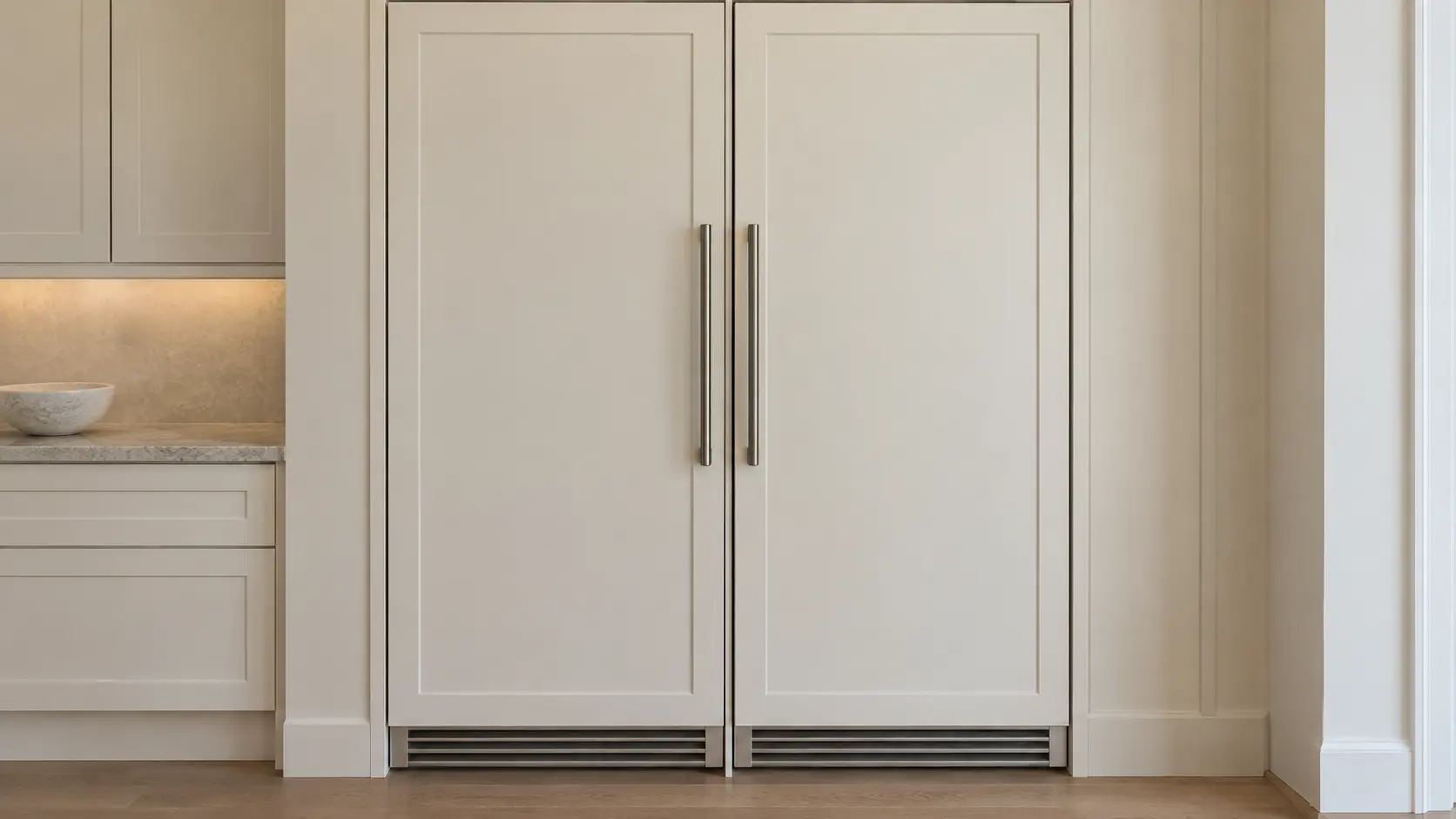
What this type is
A column is a single-temperature tower: all refrigerator, or all freezer, usually 18, 24, 30 or 36 inches wide, installed side by side to make a pair. Each column carries its own compressor, its own evaporator and its own controls. That independence is the whole point of the design, and it is also what makes diagnosis different — a fault on one column tells you almost nothing about the other.
How to tell yours is one
- Two full-height doors that are not a matched pair of fridge and freezer, but two separate appliances set together.
- Each side has its own control panel and its own temperature setting.
- One side can fail completely while the other stays perfectly cold.
- There are two grilles and two sets of documentation, often with two different model numbers.
What fails on this type
Not a general list of refrigerator faults. These are the ones this design produces because of how it is built and where it is installed.
One column fails, the other is fine
Because the sealed systems are separate, a warm refrigerator column next to a working freezer column is not a shared airflow fault. It is a fault on that column, and the working side is useful evidence rather than a distraction.
Freezer columns and their ice makers
All-freezer columns very often carry the household ice maker, so a no-ice call on a column pair is a freezer-column call.
Condenser fans
Two towers in one cabinet run means two condensers pulling air through two grilles in a confined space. Restricted airflow shows up as a unit that runs continuously without reaching its set point.
Matching doors and panels
Columns are usually panel-ready, and a pair has to look like one appliance. Hinge and closer work is measured against the neighbouring door, not just against the frame.
Getting at it
Access is the thing that most distinguishes one refrigerator type from another, and it is what decides how a visit is planned.
- Each column is serviced on its own, and the working one is a control when narrowing down a fault.
- The pair shares a cabinet opening, so getting at one may mean protecting the panel of the other.
- Two appliances means two model numbers. Have both when calling, not just the one that is misbehaving.
- Panel weight is significant on a full-height door, and hinge adjustment is part of the repair.
Repair or replace
A column pair is one of the most expensive refrigeration installations in a home, and the two halves are matched in appearance. Replacing one column means either accepting a mismatch or replacing both, which pushes the balance strongly toward repair.
Who makes them
The cross-brand view. A brand site cannot give you this, because it only knows its own.
Common problems on this type
Refrigerator Not Cooling
The compartment is warm but the appliance still has power and still makes noise.
Freezer Not Freezing
Soft ice cream and refreezing frost, or a cabinet that has gone entirely warm.
Ice Maker Not Making Ice
When the freezer is cold, the question is whether water is arriving — not whether the appliance can freeze.
Refrigerator Running Constantly
The compressor never cycles off, and the cabinet may still be holding temperature.
Frost Building Up in the Refrigerator
Ice on the back wall, around the door, or over the whole freezer — and each location means something different.
Refrigerator Control Panel Not Responding
Buttons do nothing, the display is blank or frozen, or settings will not hold.
Questions about refrigerator columns
If one column stops cooling, will the other one go too?
Do I need both model numbers?
Why is my column pair running all the time?
Back to your everyday
Let’s get your refrigerator working again.
Three short steps online, or one call. Tell us what you are seeing and pick a window that works.
Not a refrigerator? Each of these is its own appliance, and has a site of its own.
- Freezerstandalone upright freezers
- Ice makerstandalone and undercounter ice machines
- Wine coolerwine cabinets