Refrigerator problem
Refrigerator Showing an Error Code
A code narrows the search, but only the manufacturer's own table gives it meaning.
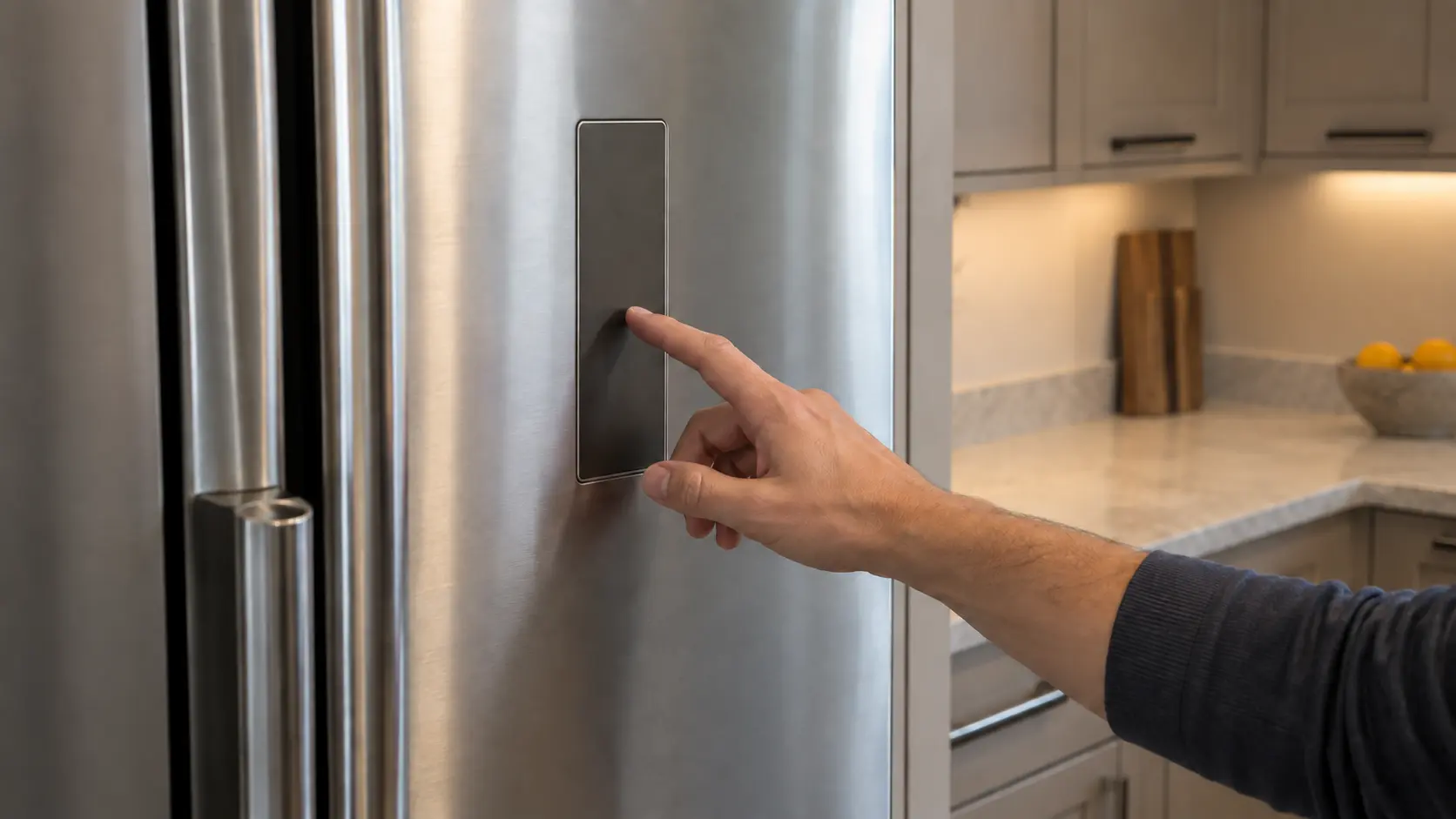
What this usually means
An error code is the appliance naming the circuit it is unhappy with. It is genuinely useful, and it is also frequently misread, because the same characters mean different things on different brands and sometimes on different generations of the same brand. Two things make a code worth acting on: the exact characters, and the model number they came from. Without the second, the first is a guess.
Five observations that narrow it
Answer these before anyone visits. Each one removes a whole branch of the diagnosis, and they cost nothing.
What are the exact characters, including any letter, and in what order?
What is the full model number of the appliance?
Does the code stay on the display, or flash and clear?
Is the appliance still cooling while the code is showing?
Did anything happen just before it appeared, such as a power cut?
Causes, cheapest first
In roughly the order a technician rules them out. The expensive answer is at the bottom because it is usually the last one true, not the first.
A sensor the control can no longer read
low to moderateThe most common category by a distance. The circuit is open or shorted and the control reports it rather than guessing.
A fan or a motor not reporting back
low to moderateModern fans report their speed, and a fan that has stopped is named directly.
Defrost cycle not completing
low to moderateOften the same fault as visible frost, caught by the control before it became obvious.
Communication between boards
moderateOn units with a display board and a main board, a code can mean only that the two have stopped talking.
A latched code after a power event
noneSome codes stay on the display after the condition has passed and clear with a reset.
Check these before you book
- Write down the exact characters, including letters, before anything is reset.
- Find the full model number; the code cannot be read without it.
- Note whether cooling is affected.
- Try a five-minute power-off reset and note whether the code returns.
- Photograph the display; it is easier than transcribing it over the phone.
How urgent is this?
Depends entirely on whether cooling is affected. A code on an appliance that is still cold can wait for a scheduled visit.
What fixes it
The work behind the causes above, with what it costs relative to the rest.
Related problems
Refrigerator Control Panel Not Responding
Buttons do nothing, the display is blank or frozen, or settings will not hold.
Refrigerator Not Cooling
The compartment is warm but the appliance still has power and still makes noise.
Frost Building Up in the Refrigerator
Ice on the back wall, around the door, or over the whole freezer — and each location means something different.
Back to your everyday
Let’s get your refrigerator working again.
Three short steps online, or one call. Tell us what you are seeing and pick a window that works.
Not a refrigerator? Each of these is its own appliance, and has a site of its own.
- Freezerstandalone upright freezers
- Ice makerstandalone and undercounter ice machines
- Wine coolerwine cabinets